Rome, often referred to as the “Eternal City,” is a living museum of ancient wonders that have shaped the world for centuries. Walking through its cobbled streets is like taking a journey through time, where the remnants of empires past whisper tales of glory, ambition, and power. From grand temples to colossal amphitheaters, each ancient ruin in Rome tells a story that continues to captivate visitors. Let’s step back in time and explore some of Rome’s most iconic ancient ruins on a guided tour.
1. The Colosseum: The Heart of Roman Gladiatorial Combat
No visit to Rome is complete without standing in awe before the Colosseum. This iconic structure, once the site of brutal gladiator battles and grand spectacles, was completed in 80 AD and could hold up to 50,000 spectators. The Colosseum’s intricate design, featuring a complex system of tunnels and trapdoors, showcases the ingenuity of Roman engineering. Today, visitors can tour its impressive amphitheater and imagine the thrill and excitement of ancient crowds cheering for their favorite gladiators. Don’t miss the view from the upper levels, where the sheer scale of the structure becomes truly apparent.
2. The Roman Forum: Where Politics and Public Life Unfolded
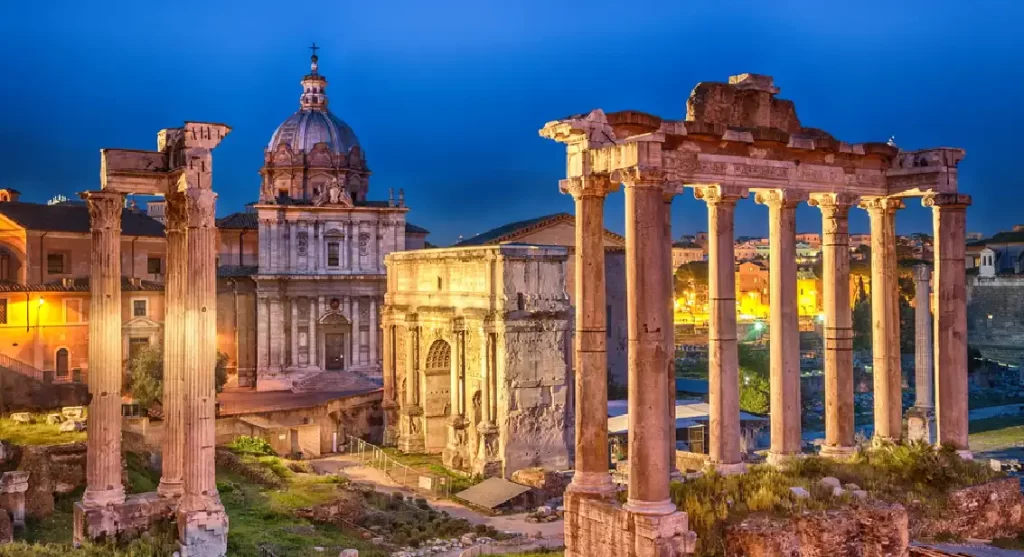
Just a short walk from the Colosseum lies the Roman Forum, the political and social heart of ancient Rome. This once bustling center of Roman public life was the stage for speeches, triumphal processions, and legal proceedings. Today, the ruins of grand temples, basilicas, and governmental buildings stand as silent witnesses to the events that shaped the Roman Empire. Key landmarks in the Forum include the Temple of Saturn, the Arch of Titus, and the House of the Vestals, each offering insight into Roman religious and political practices.
3. The Pantheon: A Testament to Roman Architectural Genius
The Pantheon, one of the best-preserved monuments of ancient Rome, is a must-see for anyone interested in Roman architecture. Originally built as a temple to all Roman gods, it was later converted into a church. Its most striking feature is the massive domed ceiling, which remains the world’s largest unreinforced concrete dome. As you step inside, the oculus (the opening in the center of the dome) allows natural light to flood the interior, creating an awe-inspiring atmosphere. Standing beneath the Pantheon’s dome, it’s hard not to be impressed by the scale and precision of Roman engineering.
4. The Palatine Hill: Birthplace of Rome
To the east of the Roman Forum lies the Palatine Hill, the most famous of Rome’s seven hills. According to legend, it was here that Romulus and Remus, the twin brothers raised by a she-wolf, founded Rome. Over time, the hill became the residence of emperors and wealthy elites. Walking through its ruins, you’ll encounter the remains of imperial palaces, lush gardens, and sweeping views of the city. The Palatine Hill offers a peaceful escape from the bustling crowds below while providing a glimpse into the luxurious lives of ancient Roman aristocracy.
5. The Baths of Caracalla: A Glimpse into Roman Leisure
Rome’s ancient bathing culture is on full display at the Baths of Caracalla. Built in the early 3rd century AD, these public baths were a marvel of Roman engineering, capable of accommodating over 1,600 bathers at a time. The ruins of the baths still reveal the grandeur of their construction, with vast halls, intricate mosaics, and the remnants of massive marble columns. Imagine yourself lounging in the heated pools or admiring the intricate frescoes that once adorned the walls. Today, the Baths of Caracalla also host cultural events, such as outdoor opera performances, adding a modern twist to this ancient site.
6. The Arch of Constantine: A Monument to Victory
Standing proudly between the Colosseum and the Roman Forum, the Arch of Constantine is one of the largest and most impressive triumphal arches in Rome. Erected in 315 AD to commemorate Emperor Constantine’s victory at the Battle of Milvian Bridge, the arch is a stunning example of Roman propaganda. The reliefs on the arch depict scenes of Constantine’s triumph and the gods’ intervention in his victory. The arch’s combination of classical and contemporary styles reflects the changing tides of Roman art and politics during the later years of the empire.
7. The Catacombs: Rome’s Hidden History
Beneath the streets of Rome, an entirely different world exists: the catacombs. These underground burial sites, carved into the soft tufa rock, are a fascinating glimpse into early Christian history. The catacombs of San Callisto, San Sebastiano, and Domitilla are among the most famous and offer tours where visitors can see the graves, frescoes, and intricate burial chambers of early Christians. The catacombs also served as places of refuge during periods of persecution, adding another layer of historical significance to these underground sanctuaries.
Conclusion: A Living Museum of Ancient Rome
Rome’s ancient ruins are not just relics of the past; they are living testaments to the ingenuity, power, and legacy of the Roman Empire. As you walk through the Colosseum, the Roman Forum, and beyond, you are not merely observing history—you are standing within it. These ruins provide a direct connection to a world that has shaped our modern civilization in countless ways. Whether you’re a history enthusiast or a casual traveler, exploring the ancient ruins of Rome is a journey that will leave you with a deeper appreciation for the grandeur of the Eternal City.
So, lace up your walking shoes and take a step back in time. Rome’s ancient ruins are waiting to tell you their stories.